First Build.
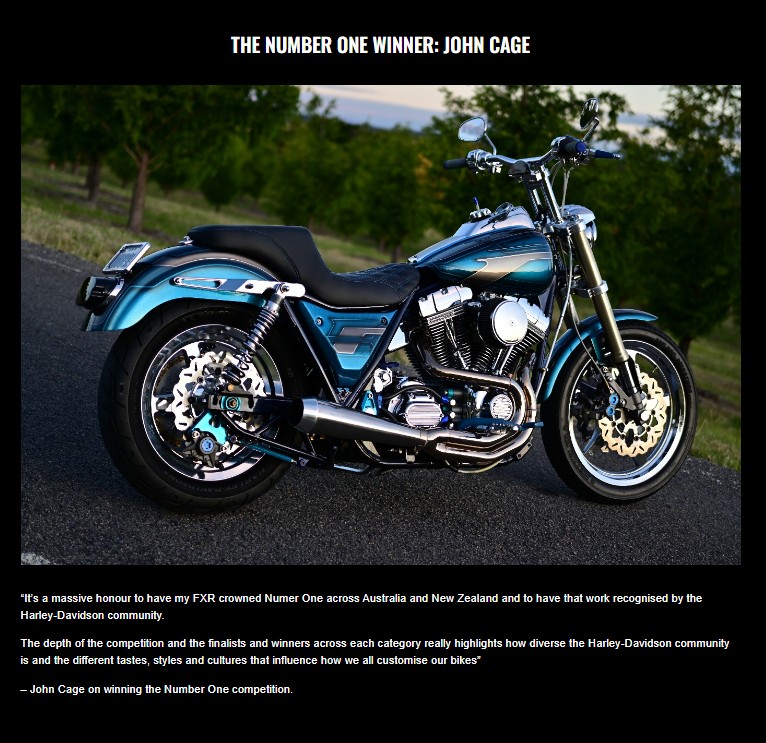
First Place.
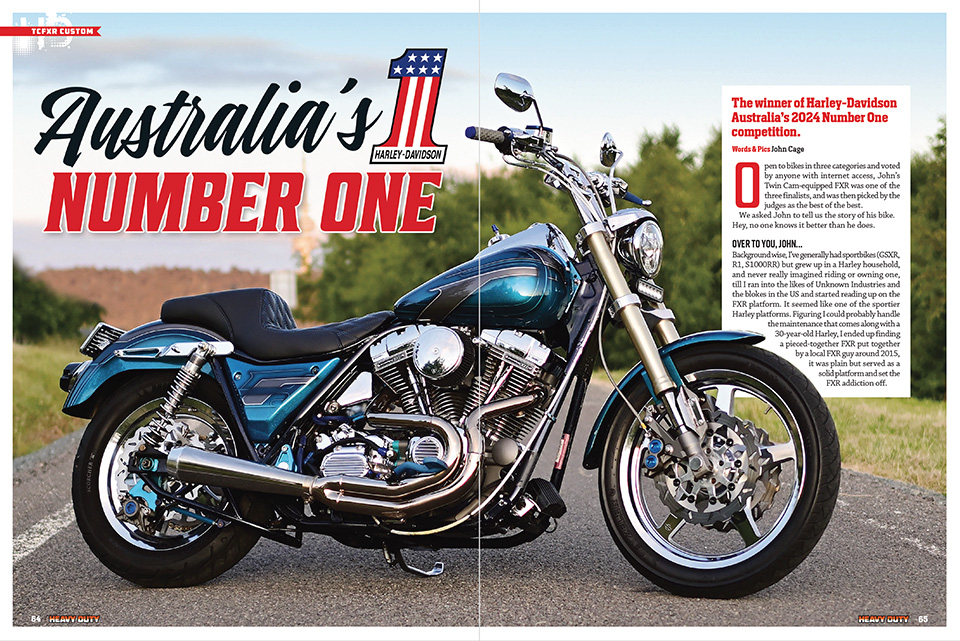
The starting point wasn’t Harleys—it was sportbikes. GSXR, R1, S1000RR. Fast, sharp, and familiar. But growing up around Harleys meant the shift was always there in the background. It just needed the right angle.
That came through the US FXR scene. Bikes that looked raw but purposeful—lighter, more aggressive, and built to be ridden hard. The FXR stood out as the platform that could bridge both worlds.
An already pieced-together FXR became the entry point. Nothing special on paper, but solid—and enough to set things in motion. From there it turned into parts hunting. Rare FXR gear, fairings, spares. The kind of stuff you collect before you fully admit you're building a bike.
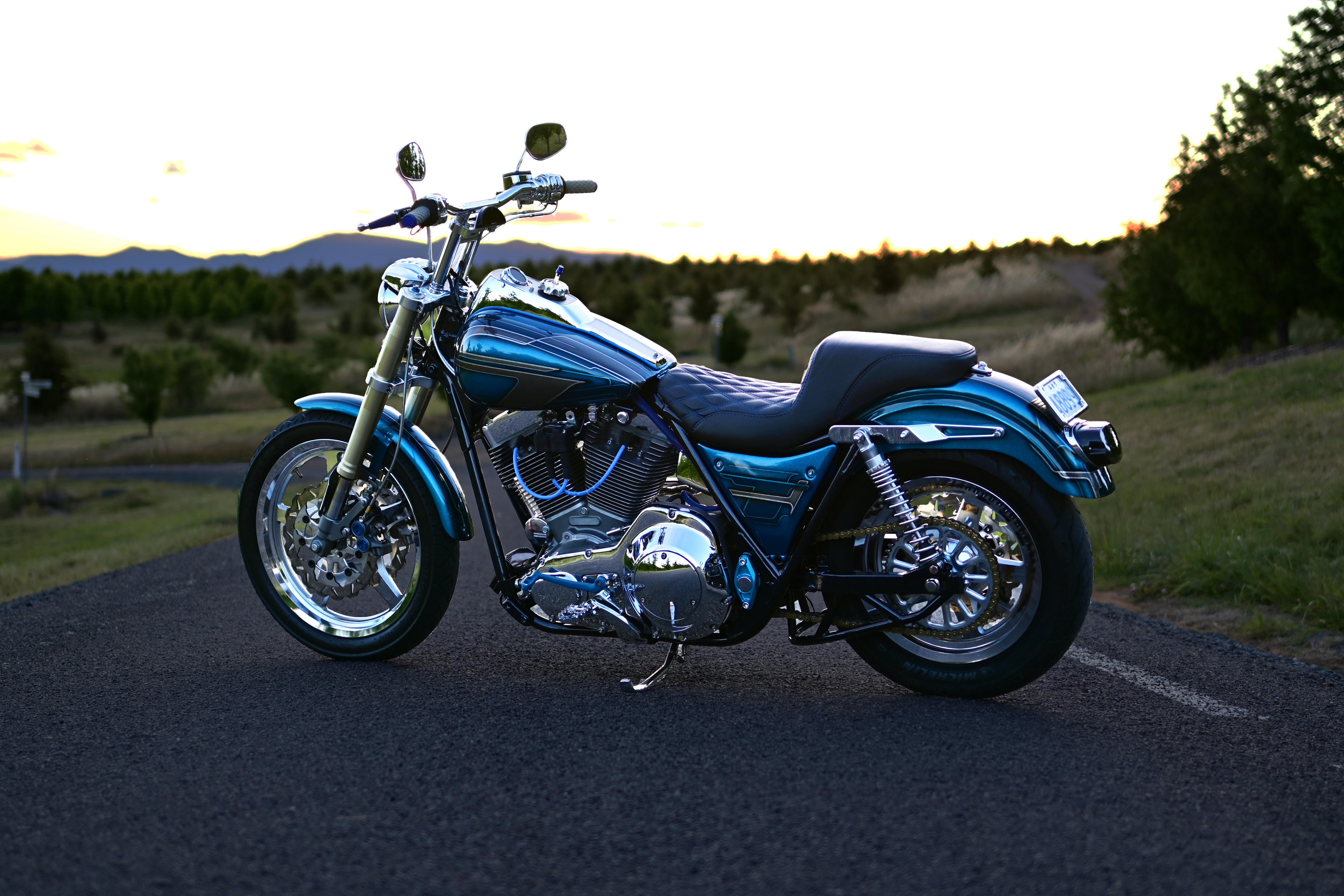
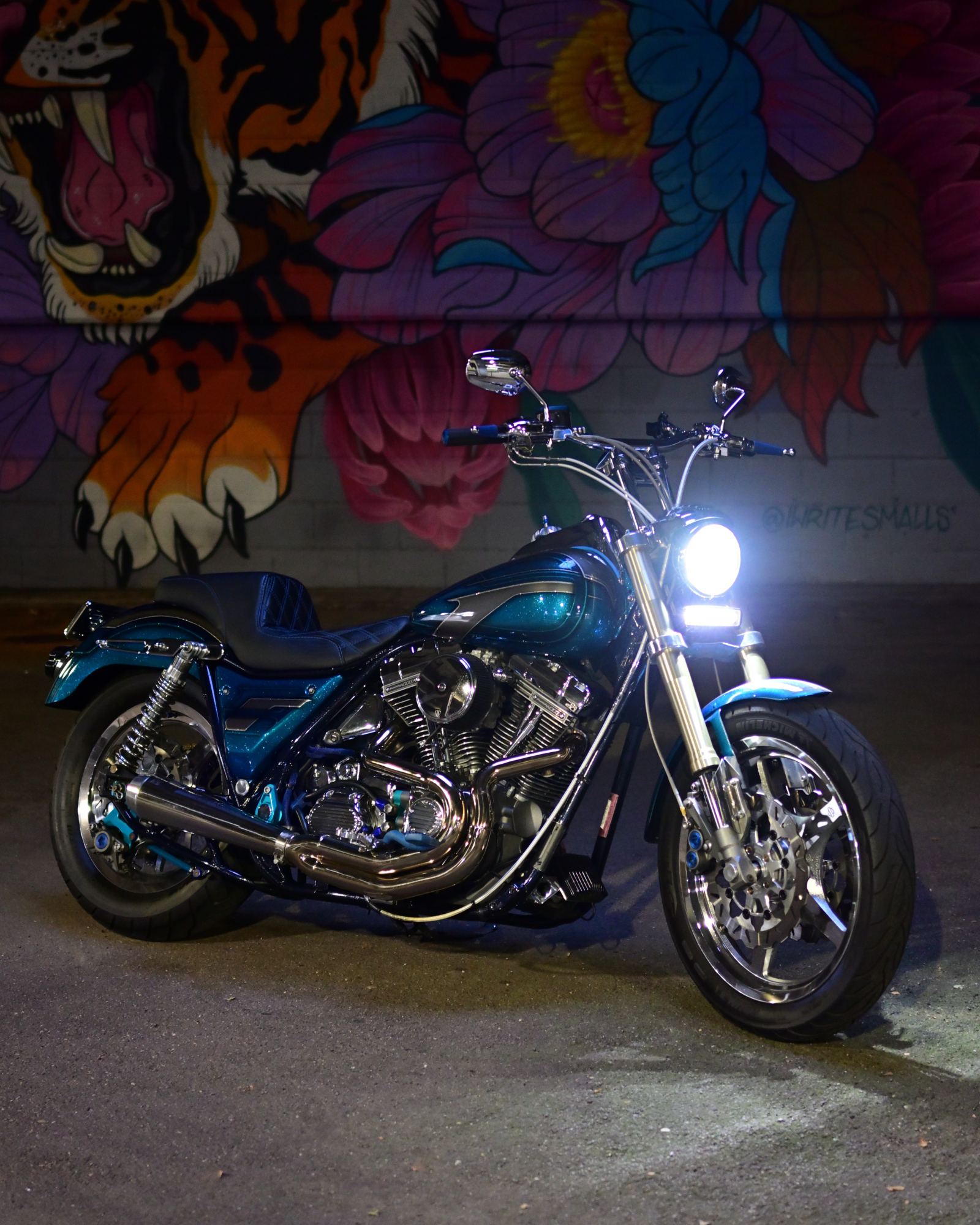
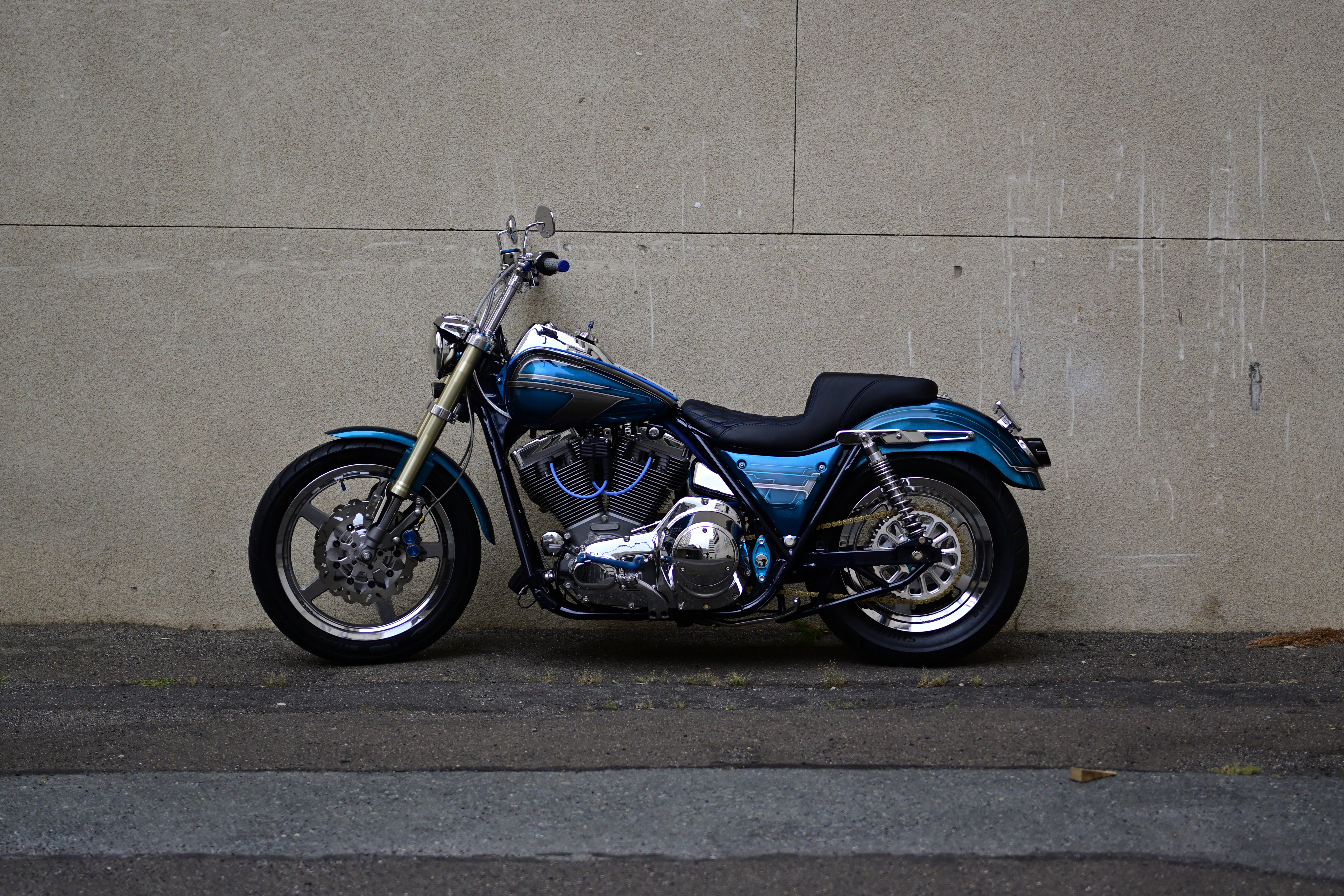
Rather than rebuild something and replace most of it anyway, the decision was made early—start from scratch. What began as a rough wheelie/thrasher idea gradually shifted into something more considered. Still aggressive, but cleaner. A 90’s-influenced FXR with chrome, flake, and a stance that actually matches the way it rides.
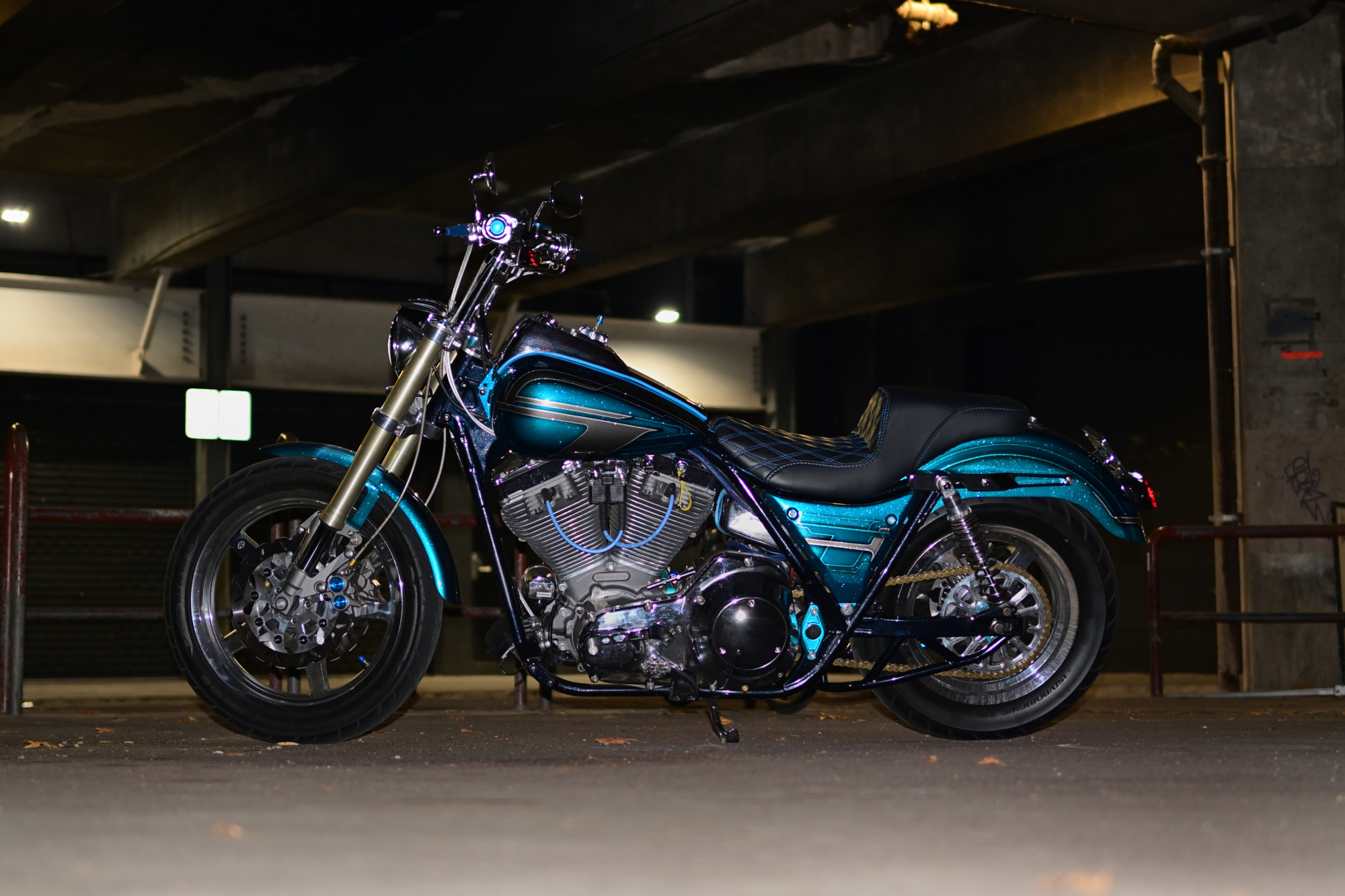
110 Cubic Inches
of Intent
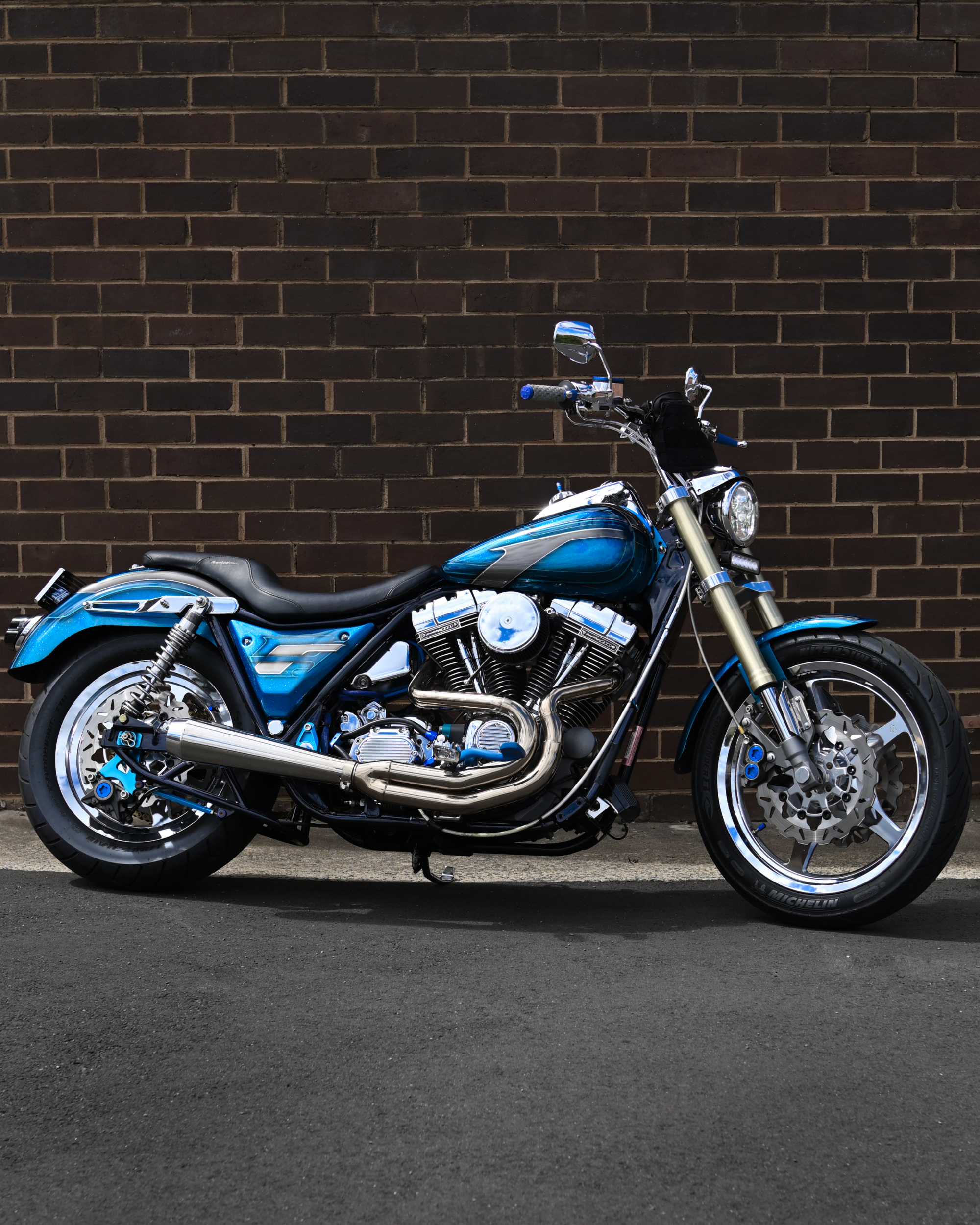
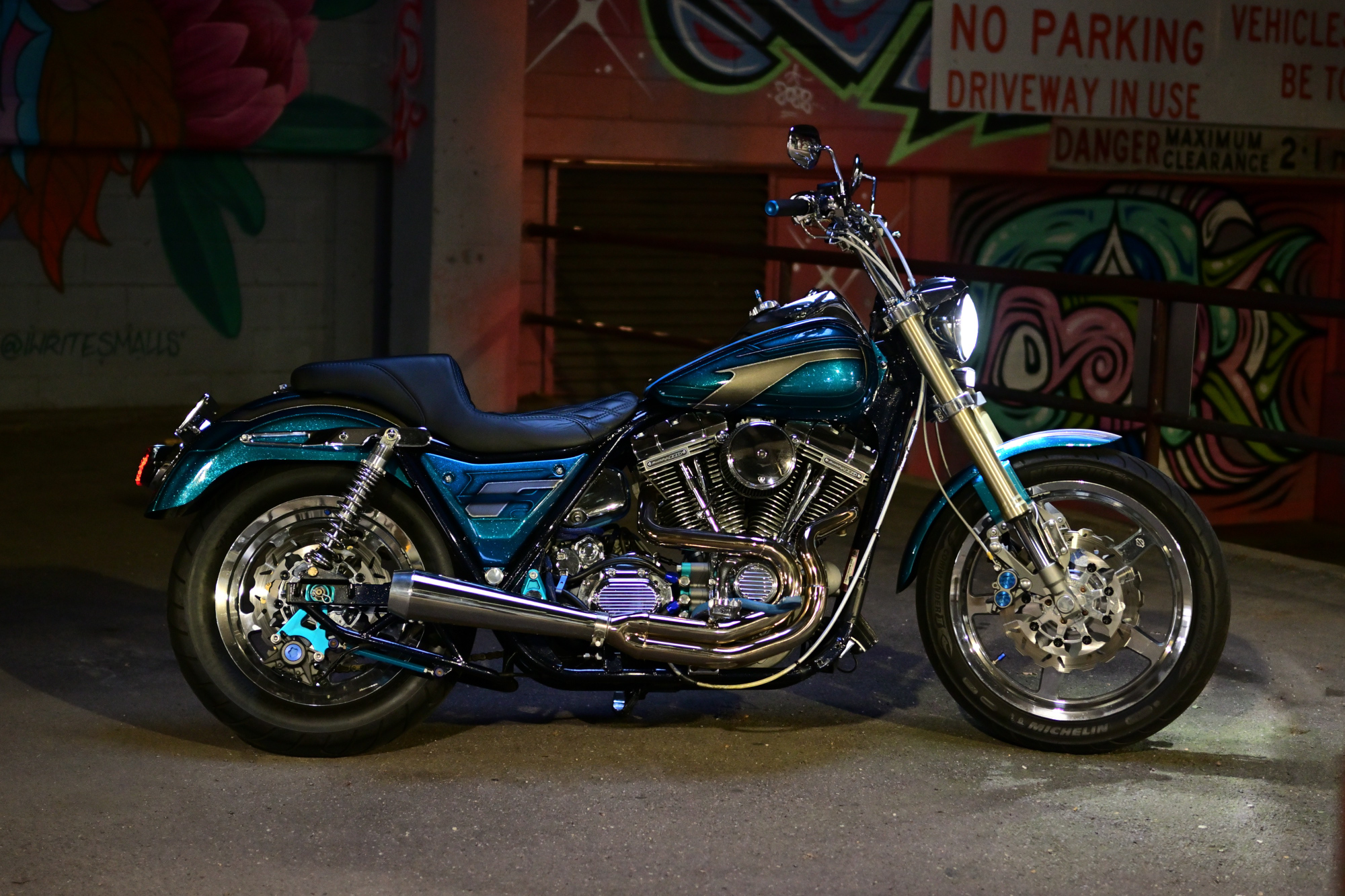
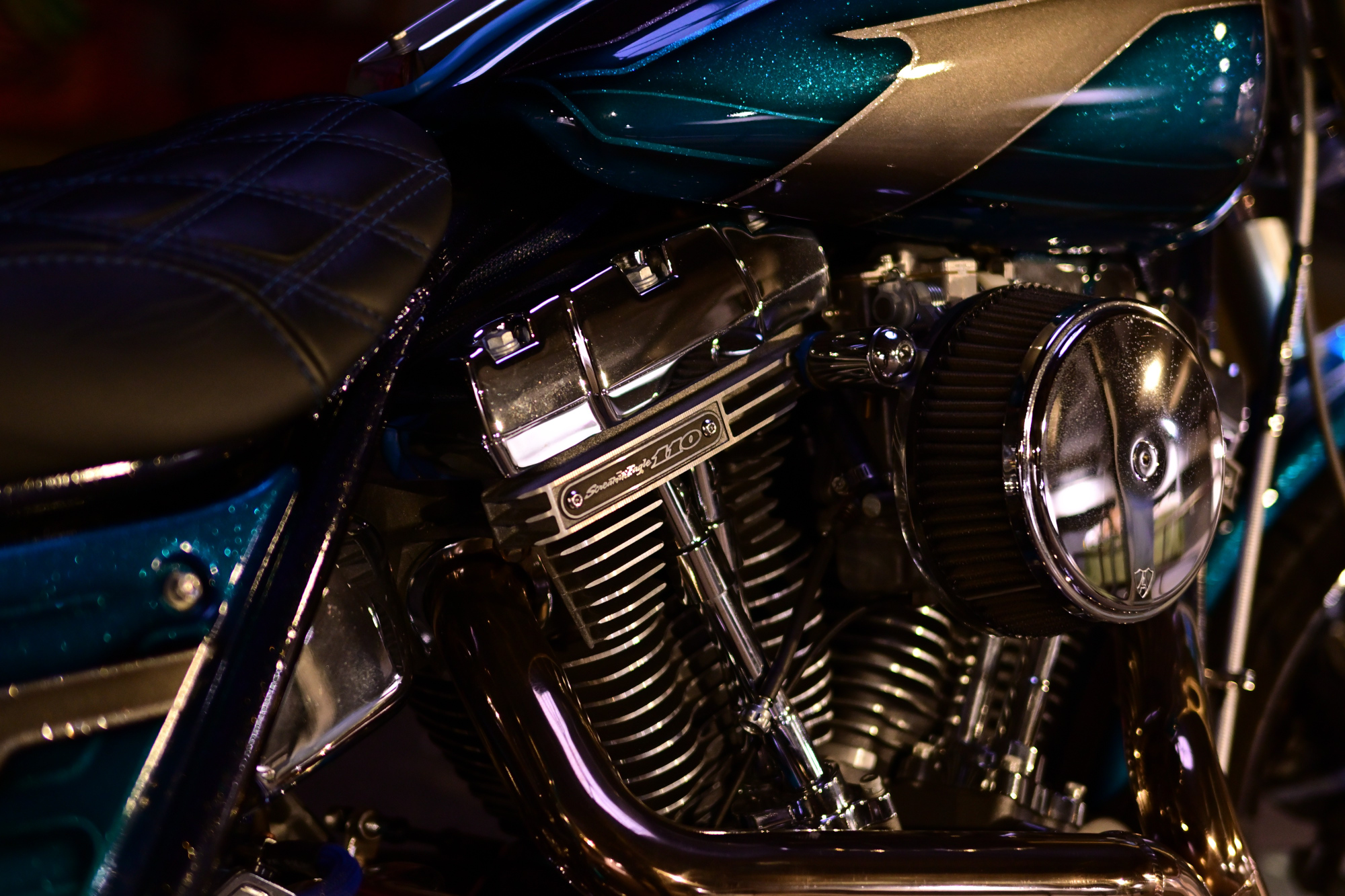
At the centre of the build is a granite grey CVO 110 Twin Cam running SE 255 cams. It’s a factory performance engine that already delivers where it counts—torque, everywhere. There was no need to overcomplicate it.
The bike is carb converted, running a Mikuni HSR45 for simplicity and response. Ignition is handled by a Daytona TwinTec, all integrated through a Motogadget M-Unit system. The wiring was built from scratch to suit the setup—clean, minimal, and reliable.
Backing it up is a JIMS 6-speed overdrive in a Delkron case. The bike is geared short, which makes it sharp and aggressive around town, but the overdrive keeps it usable at highway speeds. It’s a combination that makes the bike feel alive without sacrificing usability.
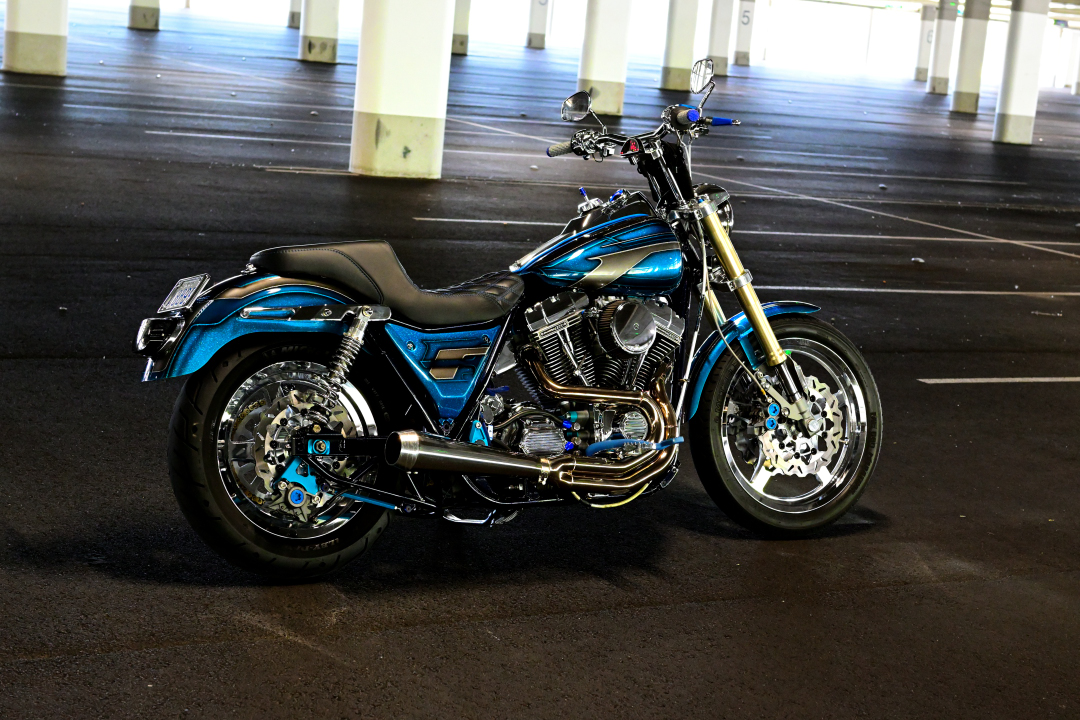
Exhaust is a Bassani Greg Lutzka 2-into-1, polished to match the rest of the build.
R1 DNA.
FXR Stance.
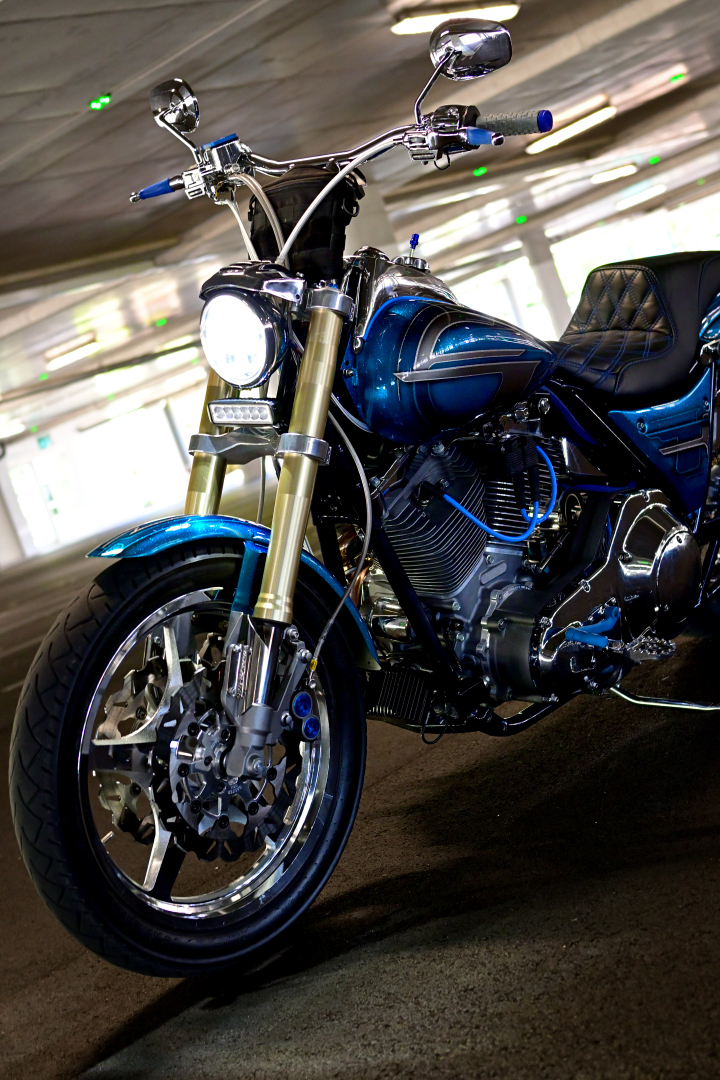
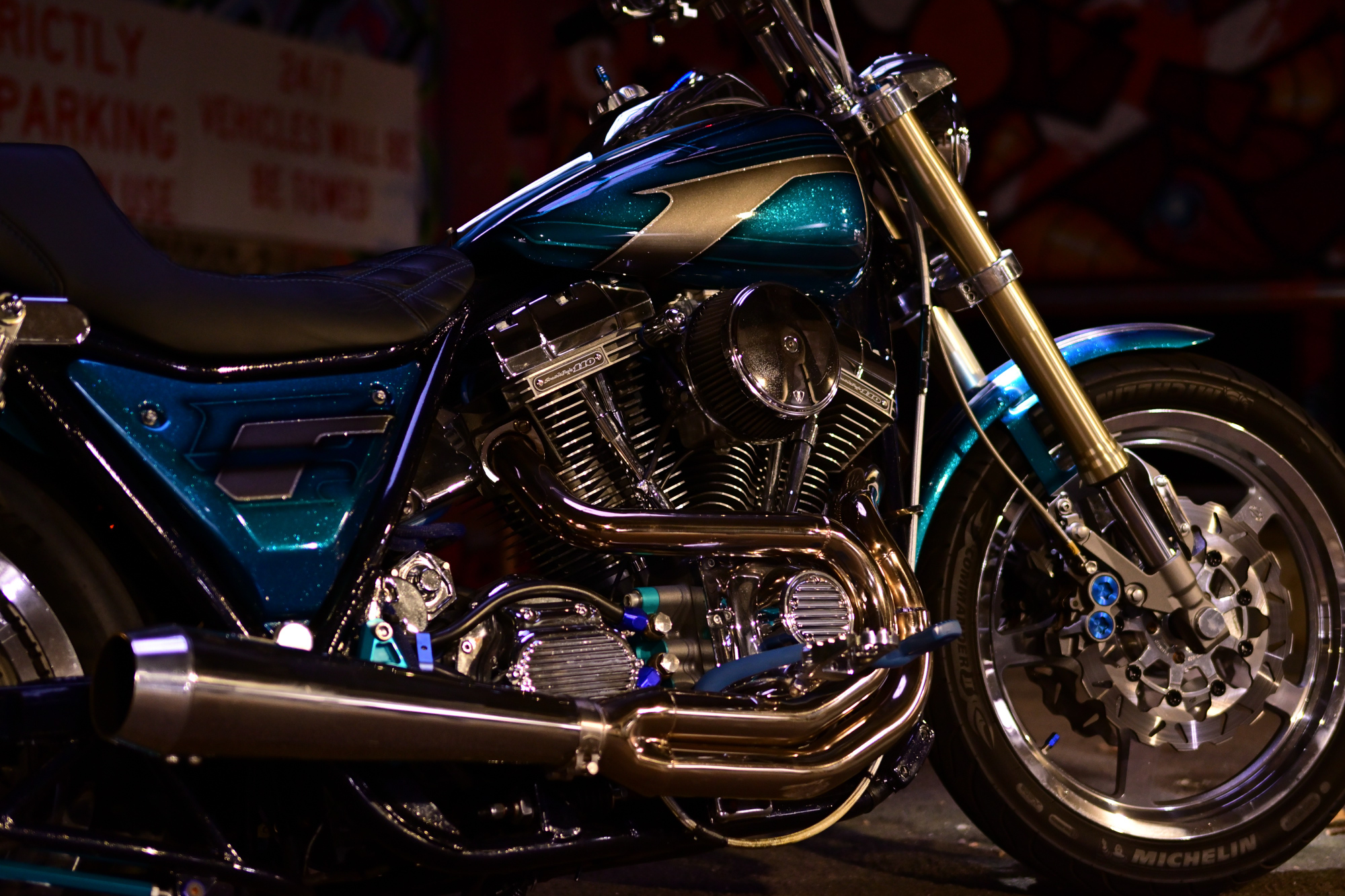
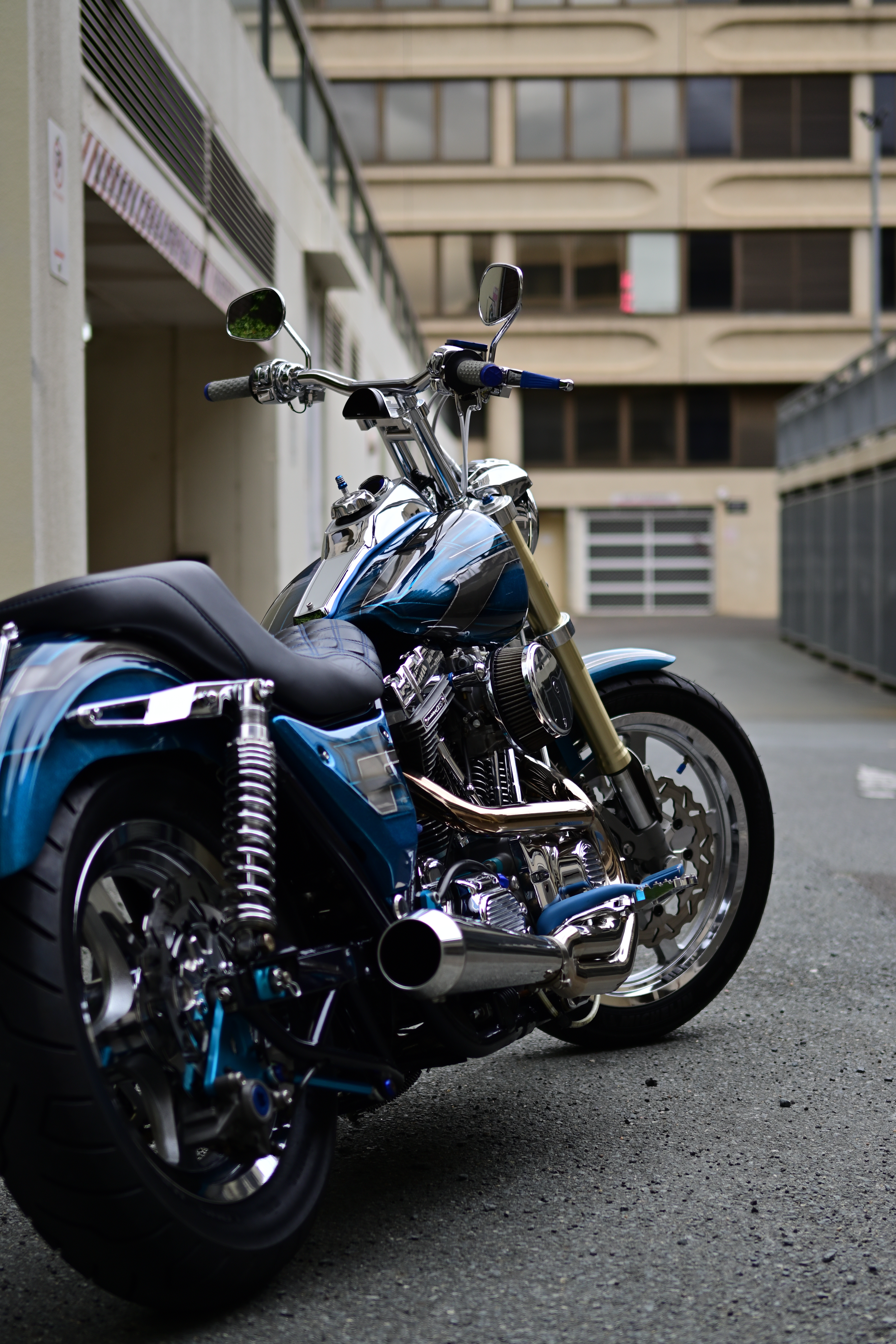
The front end sets the tone. A full Yamaha R1 inverted setup—chosen for length, performance, and the blue spot calipers that tie into the build. It gives the bike a level of front-end control and rigidity that transforms how an FXR feels.
The conversion was done properly—custom CNC triples and axle to get the geometry and offset right. It’s not just for looks; the bike rides the way it should.
Out back, Works Performance shocks balance the setup. The swingarm is braced for strength and visual weight, with an underslung caliper and internal brake line routing to keep everything clean.
Additional details include spherical swingarm bearings and machined Alloy Art pivot blocks, tightening up the rear and removing the softness of the factory setup.
Blue in
the Details
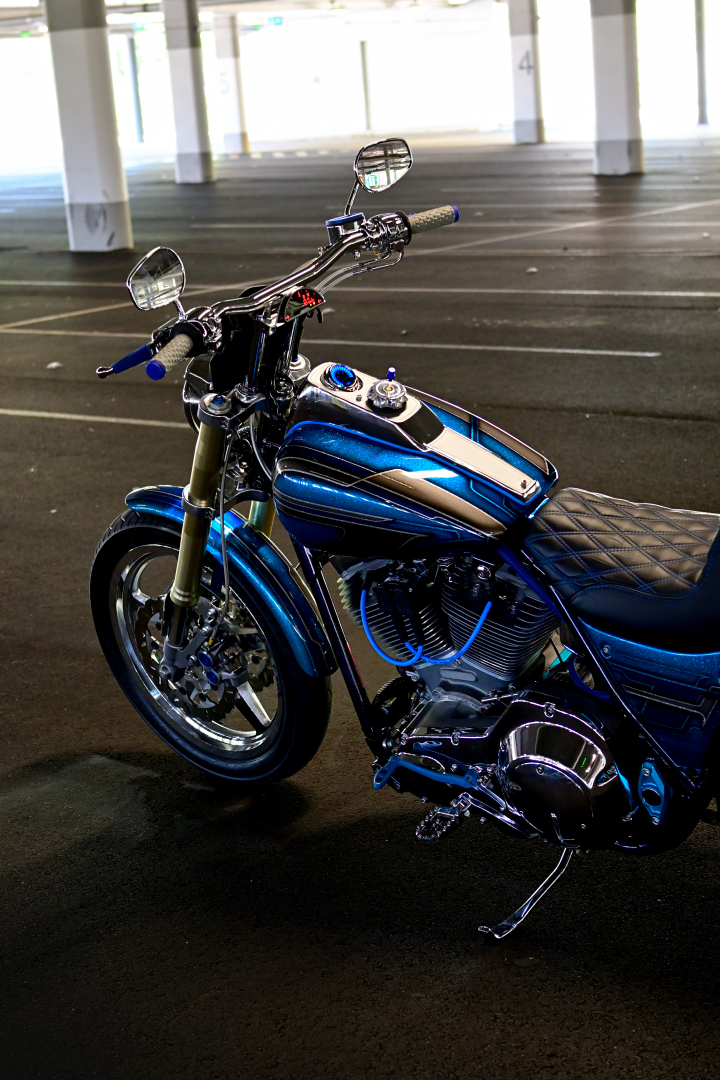
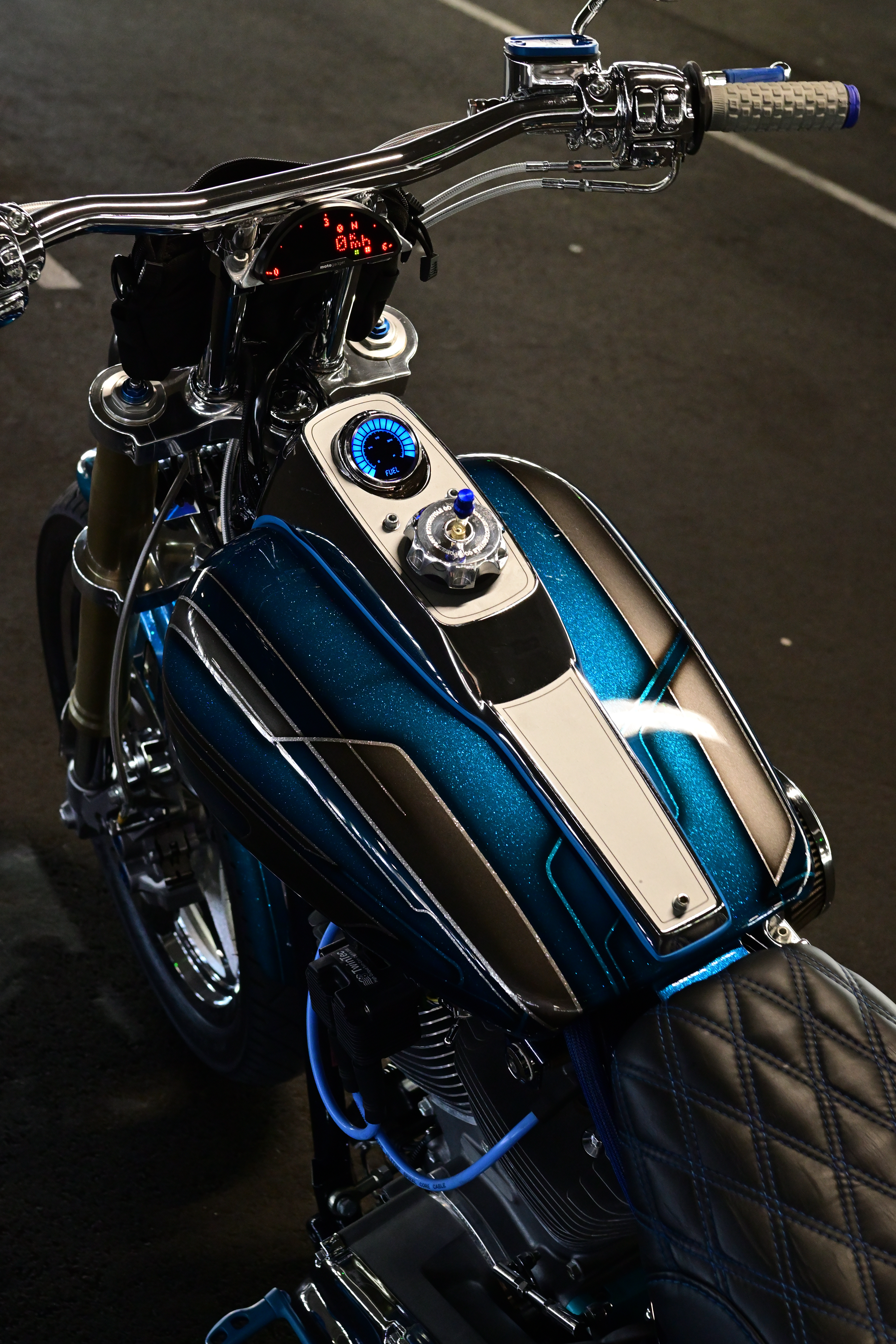
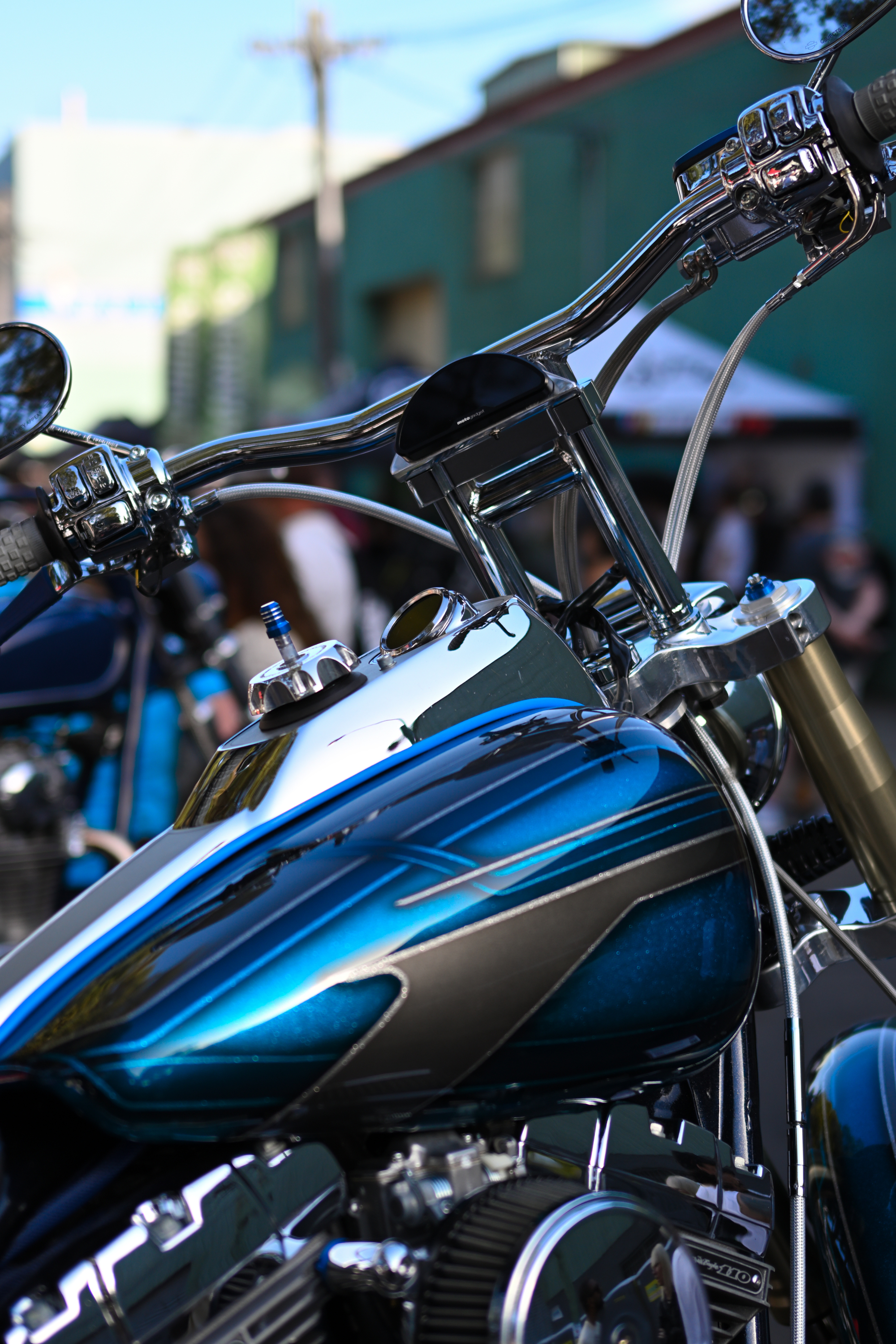
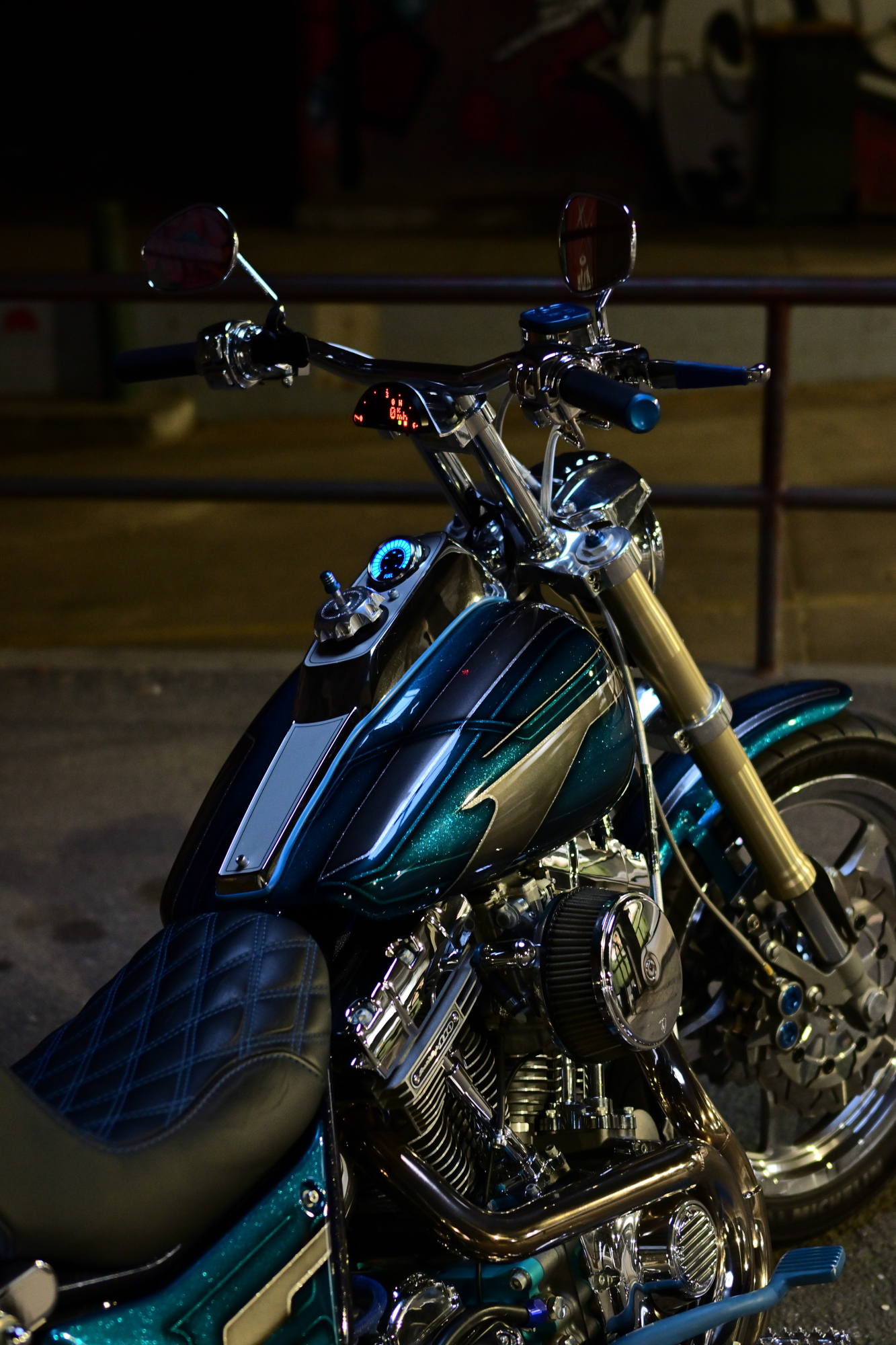
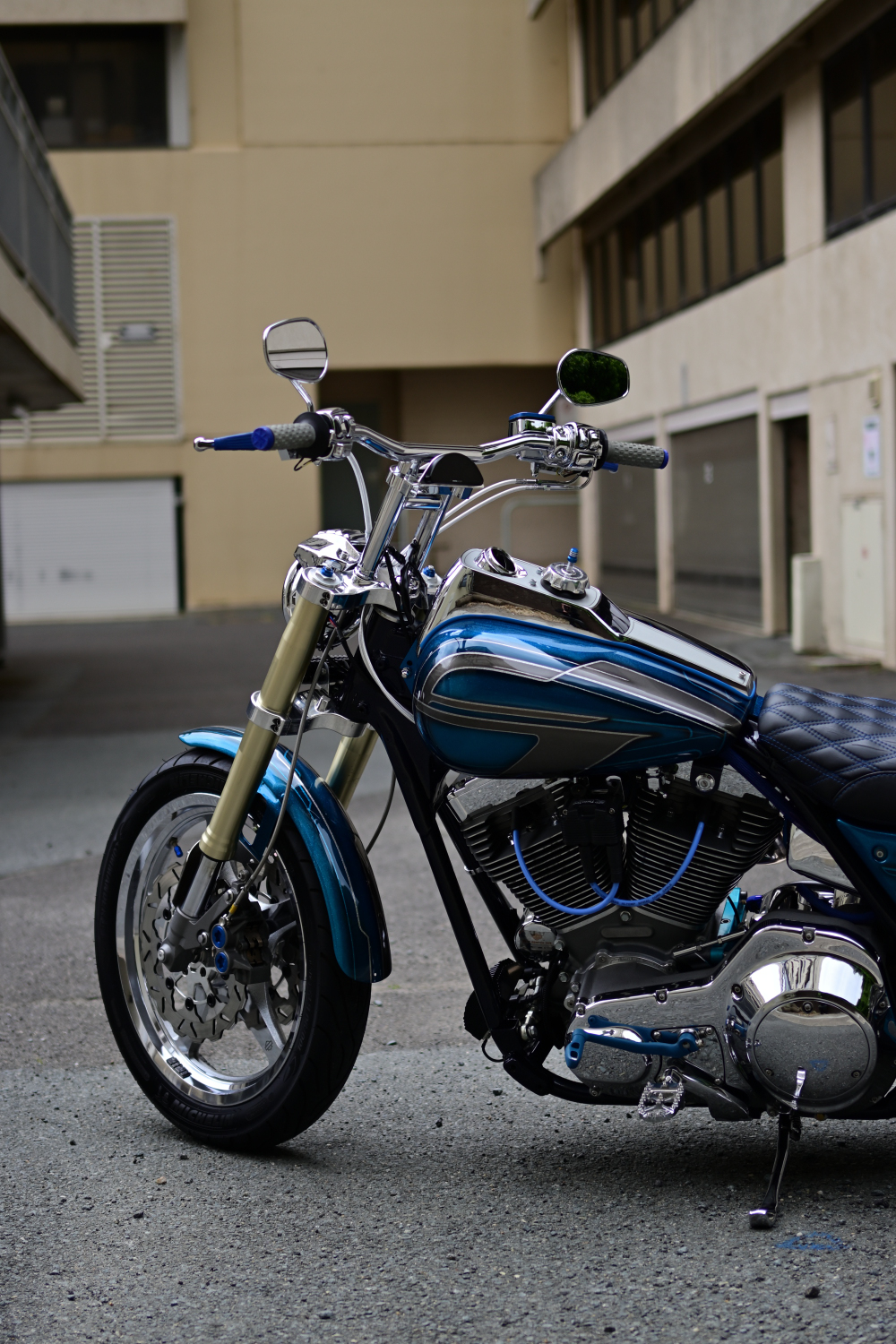
The paint drives the whole build. A dark blue with metal flake that reads almost black in low light, but opens up in the sun. It’s subtle until it isn’t. The brief avoided traditional panel work—no lace, no fishscale—just depth and tone.
Chrome leans into the 90’s influence, with a mix of factory and NOS Arlen Ness parts, including rear fender struts. It’s deliberate—moving away from the typical blacked-out look without going over the top.
The blue theme carries through in anodised billet parts across the bike—rear caliper mount, pivot hardware, and small details that tie everything together without being obvious at first glance.
The seat is a reshaped factory base, retrimmed with blue diamond stitching to finish it off.